
On: Prosecutorial Discretion

Prosecutorial discretion is a little discussed and an often misunderstood concept.
We need to talk about it more. The public doesn’t understand it, the defense bar often doesn’t understand it, judges often don’t understand it, and sadly — even too many prosecutors don’t understand it.
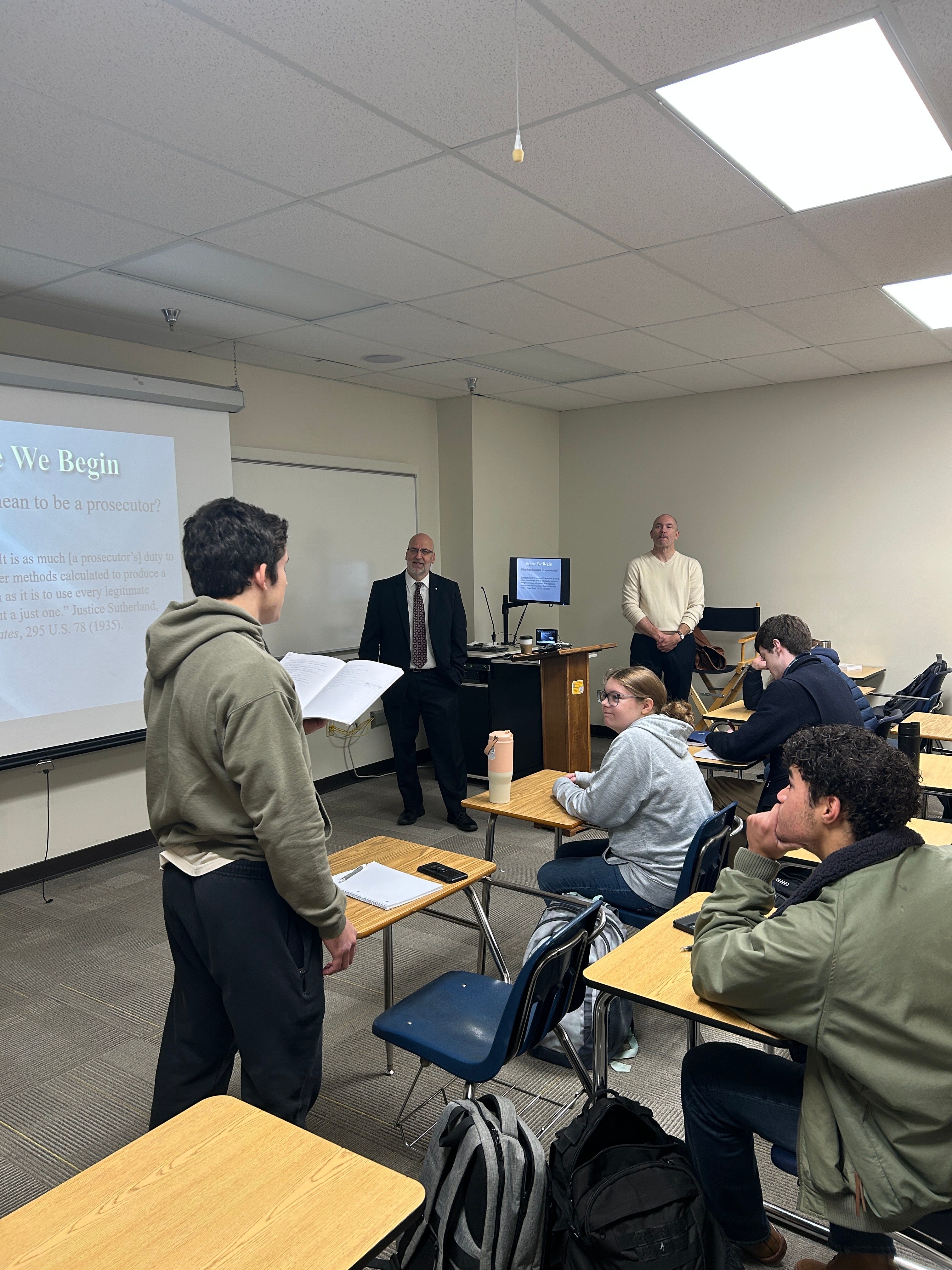
Miller Leonard published a great post yesterday about our time with college students at Bryan College in the superlative Bryan College Criminal Justice Department.
My friend and colleague Neil Harper, Ph.D. is a professor at Bryan and helping spearhead an extraordinary and fast growing CJ Department that is equipping students to go out in the field as law enforcement officers, some future lawyers, some educators themselves, and just simply educated citizens.
Neil was one of the great federal law enforcement agents I had the honor of working with for many years. We had many cases together, and he is a man of great integrity. What a solace to know that men like him have felt led to educate the next generation.
Neil asked Miller and me to come talk to his students about being prosecutors. Miller started the class talking about the prosecutor’s role of doing justice, the power we hold, and the importance of being a person of integrity with a touchstone that informs our morality and the morality of our laws.
Riffing from Miller, I began talking about process and the centrality of process to the proper functioning of our system.
Part of that process is prosecutorial discretion.
This discretion can be summed up in two words: “Can” and “should.”
The can part is pretty simple. Is there sufficient competent proof?
It is the “should” that we focused our discussion on with students. And the should is not always so simple as people fevered with emotion might make one think.
We divided the room into 2 groups and gave them the “DOJ sandwich throwing case” scenario. A DOJ employee throws a sandwich at a group of law enforcement officers who were executing their official duties.
We asked the pro-prosecution group to discuss among themselves and give us 3 reasons to prosecute and the anti-prosecution group to give us 3 reasons not to.

They hit it out of the park. Each side provided compelling reasons to support the position (they didn’t choose their sides either — they were assigned a position).
And I think they understand the challenges of making the sausage now.
Even Miller and I don’t completely agree on the approach that should have been taken (although we did not tell the students what our positions were), but the discussion and sober considerations of the issue on both sides lead to greater understanding.
What Neil and others are doing at Bryan gives me hope. Hope that the next generation will understand our system and process better — but more importantly — that we will understand each other better.
And yes, we did the Socratic method thing and got the spokesman from each group to stand and answer! 🤣
I love how you break down “can” versus “should.”
I’ve seen how clarity and structured frameworks make complex decisions feel manageable in my work with content systems.
Teaching the process this way is key, and I often explore similar methods for helping creators think and act with consistency in my Notes.
Great stuff Steven. As an amateur who is fascinated by the law, I watch Law and Order. I am shocked at the intensity of prosecution sometimes and often wonder why just because the "can" does that mean they "should?" Happens in almost half the episodes it seems.