
“My Guys”: Introduction
They aren’t all guys

I was watching a video the other day of Jeff Pearlman, who is a well known sports writer from a little town in New York. Pearlman wrote for many years for Sports Illustrated and has authored a number of books about sports figures.
He filmed a couple videos not long ago about athletes that mattered to him starting from his youth and as he grew older. Ken Griffey, Sr.; Freeman McNeil, Sugar Ray Leonard, et al.
He called them, “My guys.” Players that he supported and loved unconditionally throughout his formative years and even into adulthood. Unsurprisingly, many of the guys he mentioned had New York ties, as he grew up a fan of New York sports.
Another fascinating aspect of his commentary is the fact that some of “his guys” weren’t the most obvious superstars. Good players for sure, but guys who often flew only slightly above or even below the radar.
We have had a conversation for many years now in America about the issue of athletes as role models. I remember the discussion heating up especially when star basketball player Charles Barkley famously said, “I am not a role model.”
This is a complicated topic and one for which I can see both sides of the argument clearly.
As a Christian, I will always say that first and foremost, we are to endeavor to be Christ-like and put our focus on Him. He is our North Star and our compass.
Secondarily and ideally, our parents would serve as role models for us in the next tier below Christ.
The first thing we notice, however, is the massive drop off between Jesus Christ and the flawed and sinful humanity of our parents – even the great ones. And if we have bad parents … ugh …
But then we inevitably move on to the realities of our culture – the visibility of celebrities. Movie stars, musicians, politicians, athletes. In modern media, they are everywhere.
It is also endemic to our humanity that we elevate such people because of their public posture, and we admire them for their talents and success and in many ways seek to emulate and replicate them.
No matter how pious or well-meaning we are, such phenomena seem inevitable.
But it needn’t be bad.
I’m a “sports guy.” When I was young, I didn’t idolize musicians or actors. It was athletes. I admired great athletes and pretended to be them in my back yard, as millions of boys and girls had done before and after me.
Sports have enormous power in our culture. We can talk about whether that is a good or bad thing another time, but it is a reality we must deal with and it is that reality that forms the backdrop of my upcoming series, “My Guys.” (Note: Not all of them will necessarily be “guys.”)
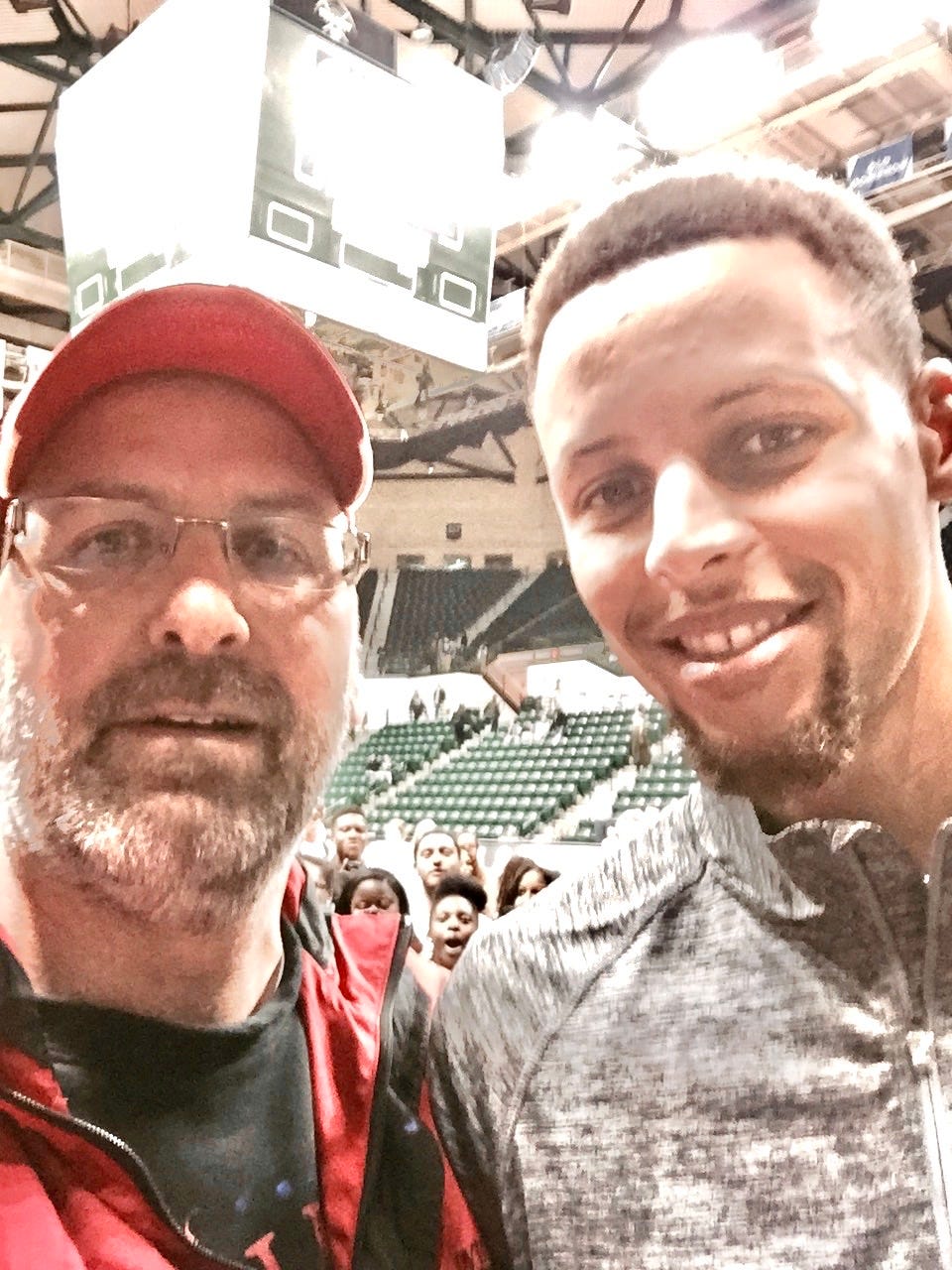
(I sincerely doubt that Steph knows or cares that he is one of “my guys,” but he will after he reads about himself in one of my upcoming My Guys essays!)
When I think about sports and athletes and role models in American history, we can see both the good and the bad, can’t we?
One of the first names that comes to most people’s minds is Jackie Robinson, who broke the color barrier in major league baseball, which was the number one sport in the country at the time he started playing for the Dodgers in 1947.
My thoughts, however, as a football guy myself and a bit of a football historian, turn to men like Fritz Pollard, Bill Willis, and Marion Motley. Pollard, for example, was the 1st black player in pro football (and 1st black quarterback) and then became the 1st black head coach in NFL history in the early 1920s. However, pro football shut the doors to black players again in the mid ‘20s.
So for several reasons, my favorite early courageous sports pioneer is Marion Motley. Motley was signed by (as you likely know by now) my favorite team, the Cleveland Browns in 1946 – one year before Robinson made it to the Dodgers in baseball. He, Bill Willis, and Paul Brown reopened pro football to black players. Also, Motley was from my hometown of Canton, Ohio. I once met him at a local golf course and have an autographed picture he signed for me.
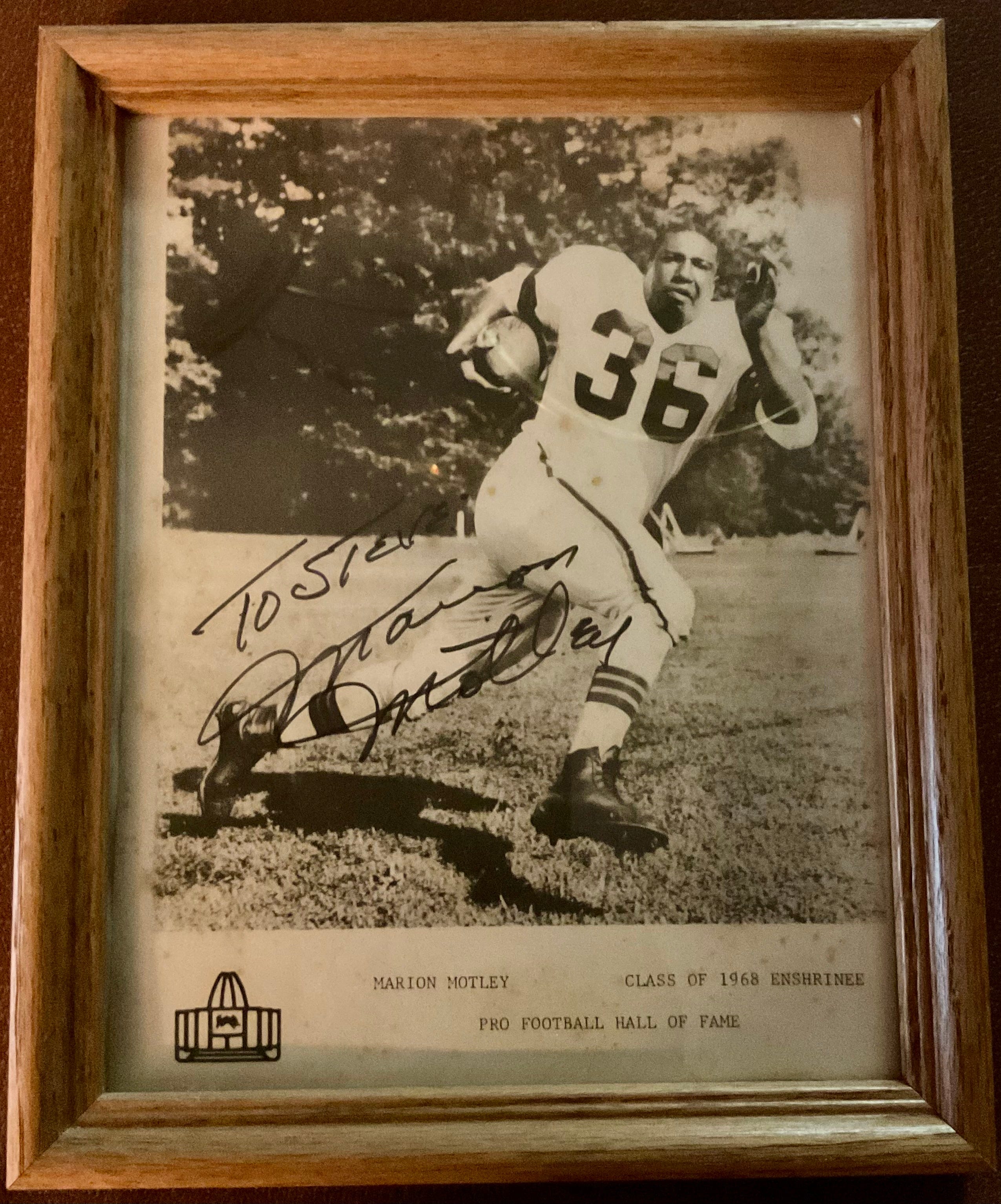
It took significant courage for black athletes to persevere in a world of overt and hostile racial discrimination. Great role models indeed.
There are others. Many others.
As an Ohio guy, I definitely have a soft spot and great admiration for Jesse Owens, the Ohio State track star who stared down Hitler and made a mockery of the “master race” Nazi narrative at the 1936 Olympics in Berlin.
How about Roberto Clemente, the Pittsburgh Pirates star who was cut down in his prime when he died in a plane crash on his way to delivering earthquake relief supplies to Nicaragua? The Roberto Clemente Award (similar to the Walter Payton Man of the Year Award – but I’ll talk about Payton another time) is still awarded to the baseball player who demonstrates the highest character and community service.
The list doesn’t include just men, however. The first woman that comes to my mind, for several reasons, is Babe Didrickson Zaharias – a name that seems sadly forgotten when discussing sports pioneers. Zaharias was named the greatest female athlete of the 20th Century – she won Olympic medals in track, was a key driver behind women’s professional golf (winning several major championships – including the grand slam and the final 2 tournaments she played in while ravaged with cancer), was an All-American basketball player, and she actually pitched 4 innings in 3 different major league baseball spring training games. A truly extraordinary woman, she also won a sewing competition at the Texas state fair and recorded several songs on her own record label.
She, too, faced significant discrimination, as women were generally discouraged from participating in sports. One sportswriter of the time wrote:
“It would be much better if she and her ilk stayed at home, got themselves prettied up, and waited for the phone to ring.”
However, the great Grantland Rice (who I think is the greatest sportswriter of all time) said of her:
“She is beyond all belief until you see her perform. … Then you finally understand that you are looking at the most flawless section of muscle harmony, of complete mental and physical coordination, the world of sport has ever seen.”
I have a rather odd and somewhat tenuous connection to Zaharias, which is partly why I think of her as a sports role model worthy of emulation. She died in 1956, when my mom was 18.
My mother was an excellent athlete whose abilities were largely wasted in her time. She was 5’10” and extremely well-coordinated (she used to easily throw footballs and baseballs and shoot baskets with me in our back yard when my dad was not around or at work).
But when she was growing up, women’s sports were extremely limited. (She would have been a star basketball player). She took up golf when she was 18 – the same year Zaharias died.
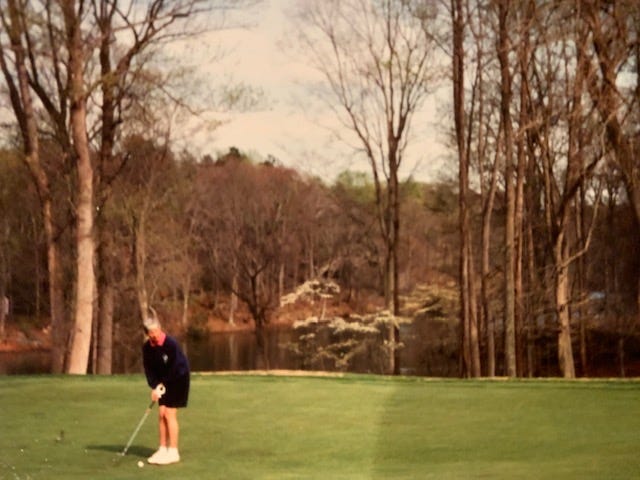
(My mom lining up a putt)
Her dad (my grandfather) was an outstanding golfer (the only thing he did in life left-handed was play golf, interestingly). He sometimes hobnobbed with PGA players. My mom had an autograph book that features signatures from the likes of Arnold Palmer, Billy Casper, Julius Boros and other well-known PGA stars. He once carded a hole-in-one and had his certificate signed by the all-time great golfer Walter Hagen.
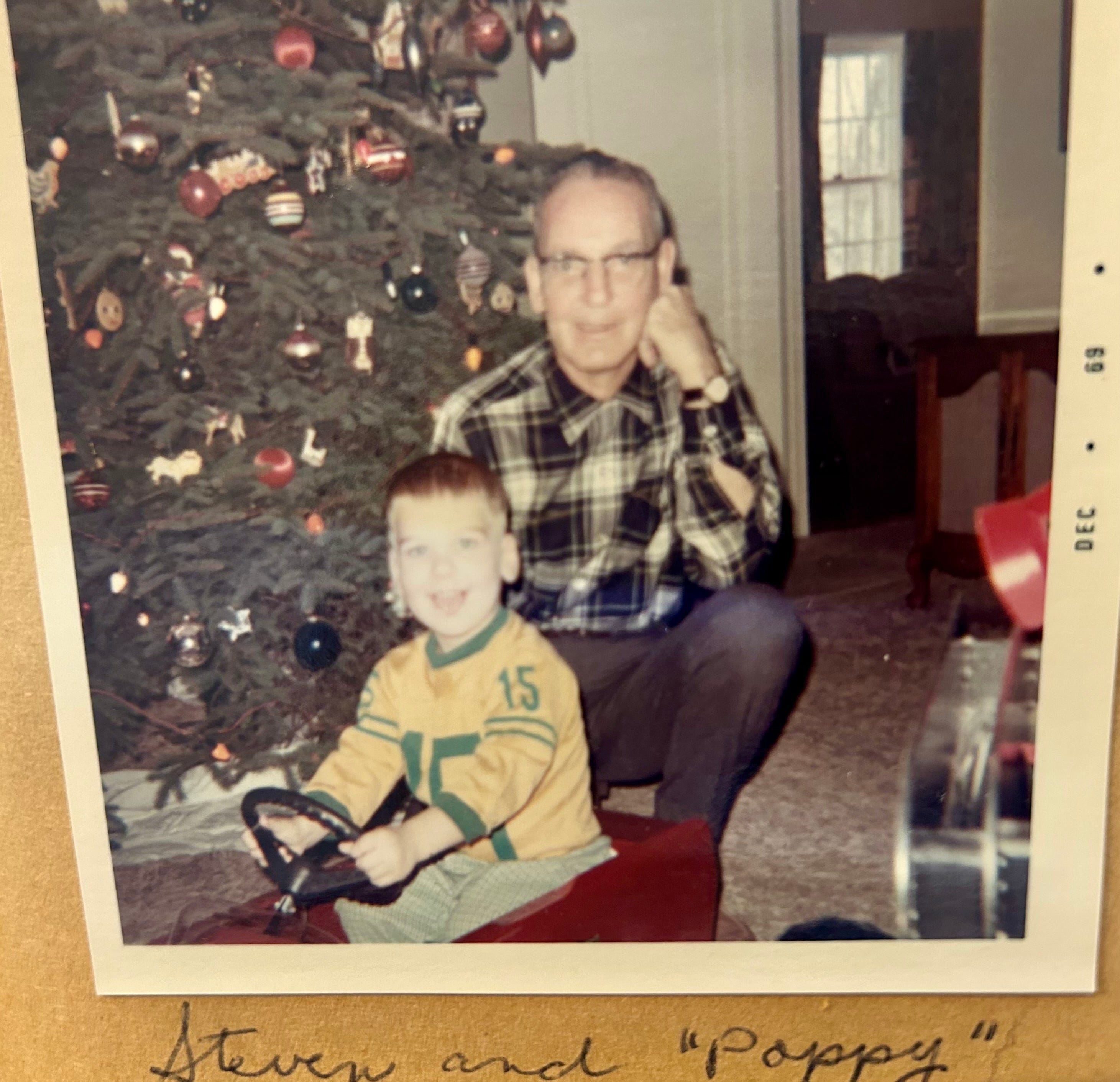
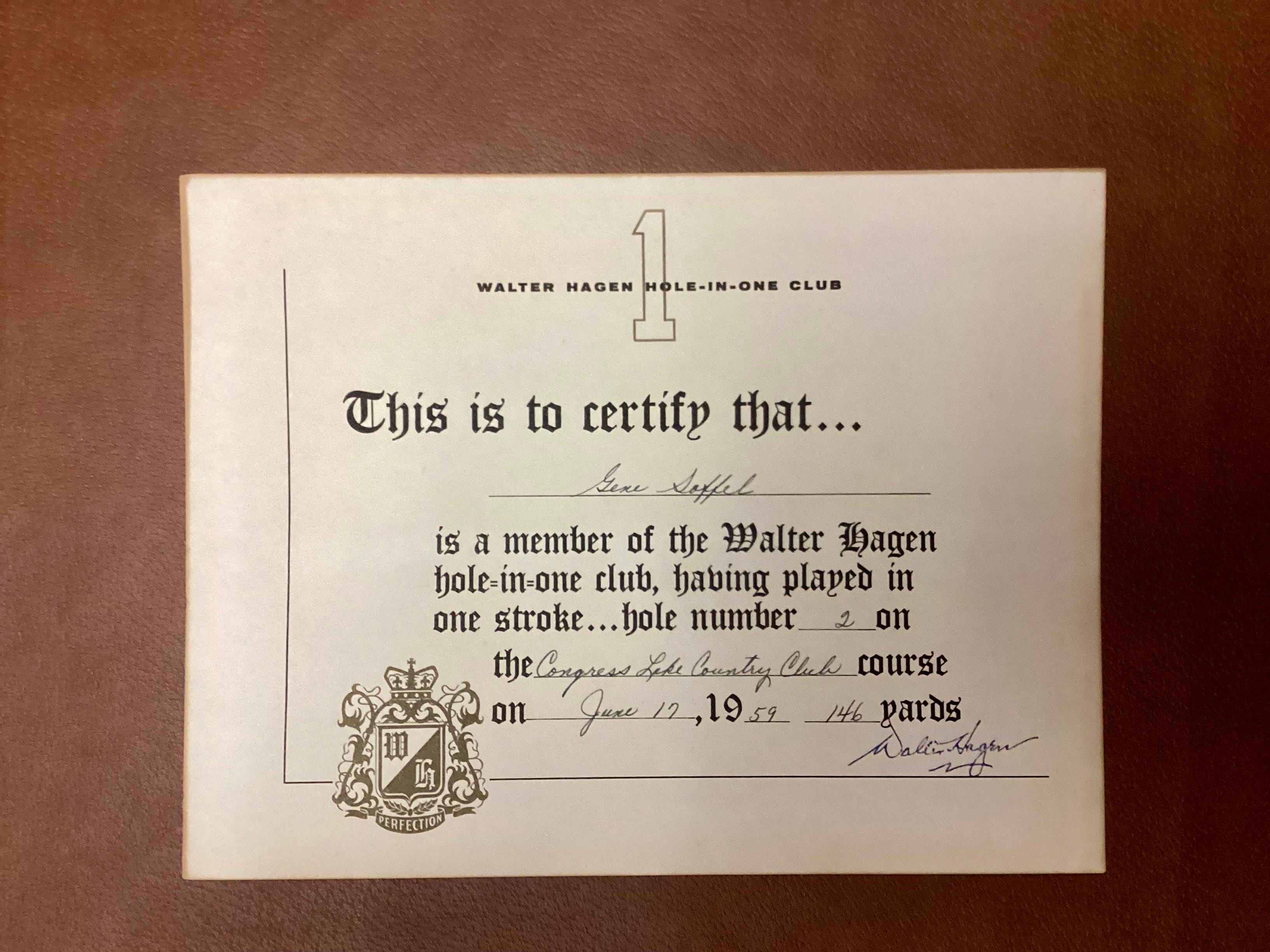
(My grandfather and me. And his Hole in One certificate signed by Hagen).
My mom’s golf pro/teacher was a man named Joe Guysick. Guysick was a fairly well known golf pro and one of the golfers he had worked with was … Babe Didrickson Zaharias. Another golfer he once worked with was … Steven S. Neff. Ok … I’m not much of a golfer. But he did give me several lessons when I was 10. And I shot a 91 last week for my 1st trip to a golf course in almost a year! But I digress…
My mom had only been playing a couple years when she won a tournament. Upon Guysick’s retirement many years later, he was interviewed by a reporter who asked him what his most memorable moment was as a golf pro. He didn’t mention Zaharias; instead, he named my mom’s tournament victory.
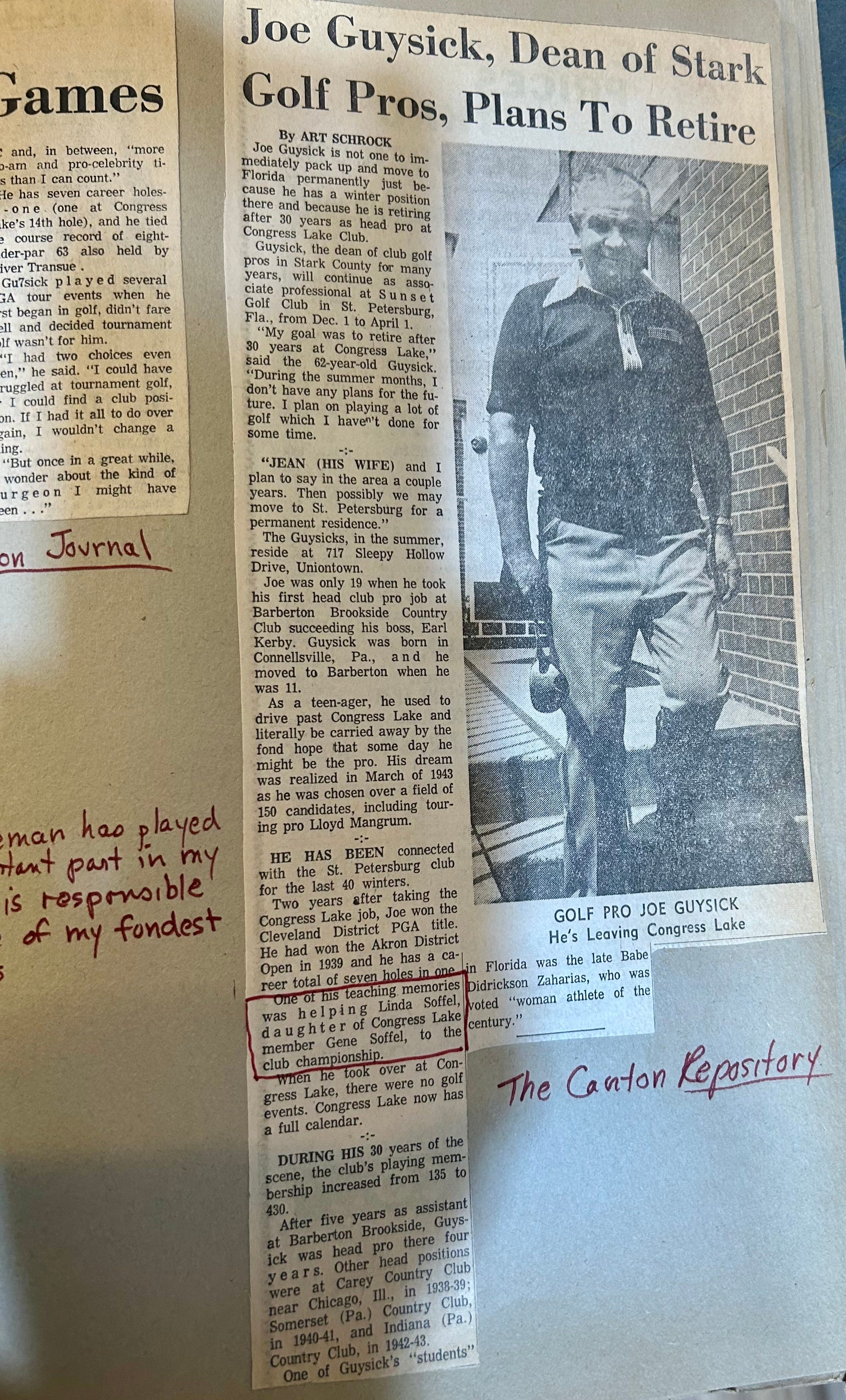
(Article where Guysick mentions my mom before Zaharias gets mentioned as another student of his)
My mom was tangible evidence of the impact of female athletes like Zaharias.
I also remember as a young boy admiring Chris Evert. Yes, of course I had a crush on her; she was very pretty. But I also remember thinking that she demonstrated that a feminine woman could be as fierce a competitor as any man. That was still relatively revelatory to a young boy in the 70s.
And as we move forward in time, we can see many athletes worthy of admiration through their conduct on and off the fields of play (note: none of them are perfect!):
Cal Ripken, Jr.
Derek Jeter
Ichiro Suzuki
Jose Ramirez
Drew Brees
Larry Fitzgerald
Kurt Warner
J.J. Watt
Tim Tebow
Cam Heyward
Stephen Curry (more about him in a later episode)
Grant Hill
Jonathan Isaac
Mia Hamm
Caitlin Clark
And many many more…
We can also think of a number of BAD athlete role models, can’t we?
What about convicted murderer, Aaron Hernandez? O.J. Simpson? Lance Armstrong? Tonya Harding? Pete Rose? Barry Bonds?
And many many more…
What does that teach us? That we should not have athletes as role models?
I don’t think so.
What it teaches us is that as parents, we have a duty to guide our children prayerfully, carefully, and with wisdom and discernment. That includes paying attention to those athletes and celebrities they tend to focus on. It means doing research into those people and gently guiding them to those we think model Christ-like or moral behavior the best – while understanding they all have clay feet.
So what I want to do in this series is reminisce. I’m a sucker for nostalgia. For history. For sports history. For biographies.
My remembrances will be about the athletes I have admired over the years (Pearlman would call them, “My guys. He’s my guy. I’m rolling with that dude.”).
Some of them will be extremely famous and well-known. Others will be completely unknown to you. I’m going to explain how and why they came to be “my guys.” Not all of them became my guys for some giant principled purpose but rather for a boy and a young man who aspired to achieve something himself and admired something about these various individuals.
And as is the beauty of sports, some will be men. Some women. Some black. Some white. Across all demographics, partly because as a sports fan, I learned that discrimination based on someone’s amoral immutable physical characteristics is … evil. That God loves us all and we all have equal worth in His eyes.
And I think sports actually can help us envision that.
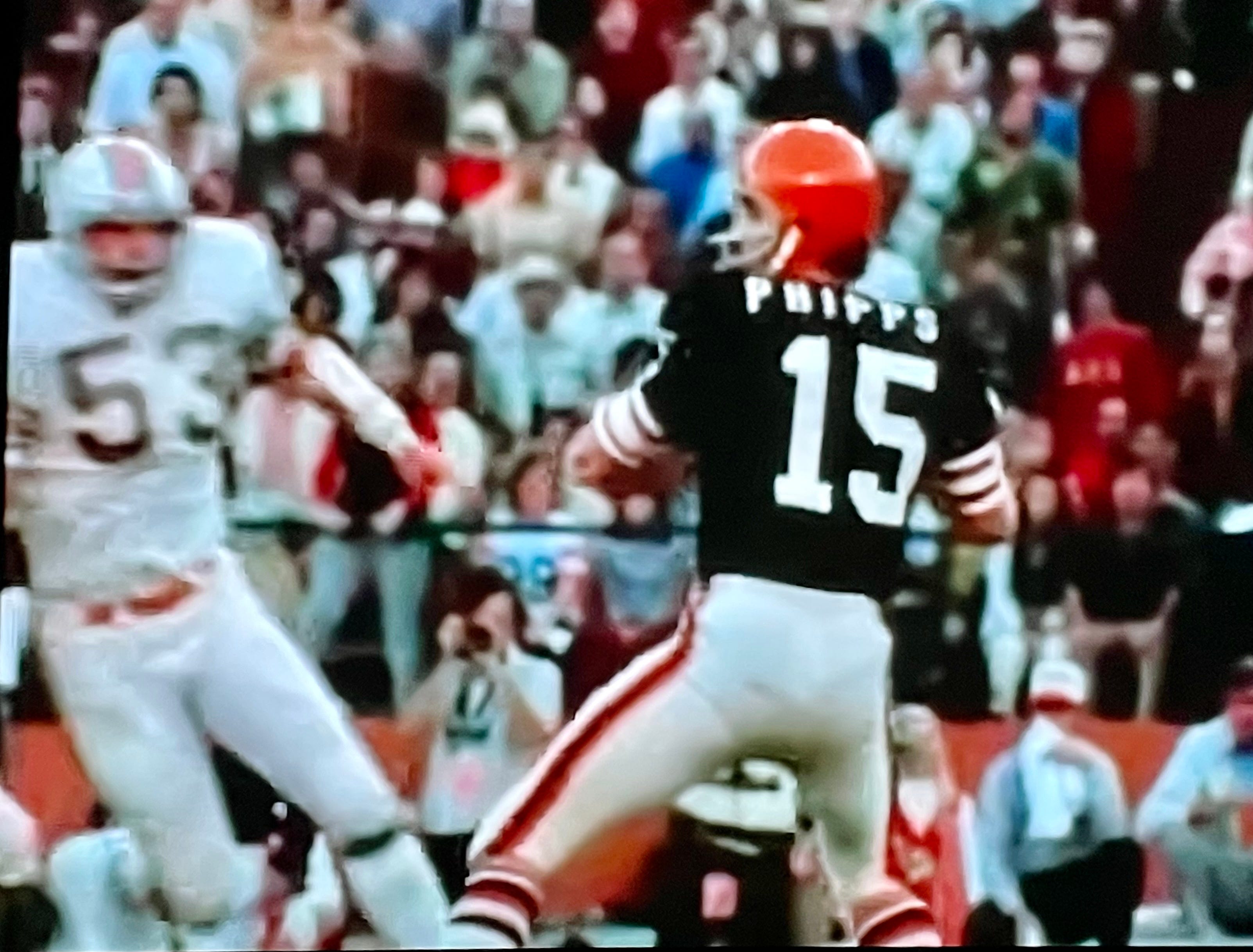
So … first up in my series the next time I write will be (drum roll) …….. Mike Phipps.
Go ahead and look him up while you’re waiting for me to write about him.
Also, check out selections from my other various series on Substack while you’re waiting:
Football & Forensics
Trials & Tribulations
Policing Pontifications
If you like courtroom drama, little known personal sports stories, crime and punishment, culture, politics, religion and other highly controversial topics(!), there might just be something in there for you!
I often scroll a piece before reading it (kind of like perusing a book in a book store). So, I saw Motley’s picture before reading his name. Do I get bonus points for recognizing him by his picture only?
Never heard of that Mike Phipps, which is surprising. (I played against a really good Mike Phipps in hs)